You'd probably laugh.
"Infrastructure doesn't work that way," you'd say. "You need factories, supply chains, distribution networks, decades of R&D, billions in capital."
And that's exactly why incumbents lose.
Because they think exactly the way you just did.
Let's meet the giants:
Xylem Inc. – Market cap: ~$20B, revenue: $5.8B/year KSB Group – Revenue: €2.5B/year, 190 years in business Grundfos – Revenue: €4.3B/year, 19,000 employees globally Sulzer – Revenue: CHF 3.1B/year
These giants dominate the global pump and turbine market. They have:
Total addressable market: $100 billion+ globally.
They're giants.
Established.
"Too big to fail."
And that's exactly their weakness.
Meet Štefan Marinko:
On paper: This looks ridiculous. One guy vs. industry titans?
In reality: This is exactly how disruption starts.
1. Legacy infrastructure = inertia
Xylem, KSB, Grundfos have factories optimized for mass production of EXISTING designs.
Changing a product line means:
Štefan? He can pivot in 3 weeks. CAD redesign → CNC production → test → iterate.
✔️ Winner: David (Speed > Scale)
2. Market focus = blindness
Big companies serve big customers:
These customers want PROVEN, CERTIFIED, STANDARDIZED solutions. They don't want innovation – they want reliability.
So incumbents optimize for: reliability, certifications, compliance.
What they miss: Off-grid, mobile, modular applications.
Who needs mobile pump-turbines?
Market size: $20-50 billion (serviceable available market).
Current solutions: Non-existent or fragmented.
✔️ Winner: David (New markets > Old markets)
3. IP protection = stagnation
Big companies have thousands of patents. But most are incremental improvements on OLD designs.
Why? Because innovation is risky. Boards prefer "safe" R&D: 5% improvement on existing pumps, better materials, minor efficiency gains.
Disruptive innovation?
Too risky. Too expensive. Too uncertain.
Štefan's approach: Novel dual-mode architecture (pump + turbine in ONE unit). This isn't an incremental improvement – it's a DIFFERENT category.
✔️ Winner: David (Radical innovation > Incremental improvement)
4. Business model = limitation
Incumbent model: Manufacture pumps → sell pumps → service contracts Revenue depends on VOLUME. More units sold = more revenue.
STEFAN model: Develop IP → license to OEMs → recurring royalties Revenue depends on ADOPTION, not volume.
Math:
Example: Voith generates $100M+ annually from hydro IP licensing alone – WITHOUT manufacturing every unit themselves.
✔️ Winner: David (Licensing > Manufacturing)
"But how can $300K compete with billions?"
It doesn't compete directly. It builds a BEACHHEAD.
Allocation:
€150K – Engineering & Testing (50%)
Goal: Prove the technology works in real conditions.
€150K – IP & Pilot Preparation (50%)
Goal: Protect the IP and prepare for licensing deals.
Month 0-3: CNC components + instruments Month 3-6: Assembly + flow/pressure testing Month 6-9: Field pilot + performance data collection Month 9-12: OEM licensing negotiations
By Month 12:
By Year 2:
By Year 5:
By the time Xylem, KSB, or Grundfos notice:
Their options:
Most likely outcome: Acquisition or licensing. Because it's cheaper than competing.
Example: Xylem acquired Sensus (smart water tech) for $1.7B. Why build when you can buy?
Too little funding: Can't build prototype, can't validate. Too much funding: Bureaucracy, pressure to scale prematurely, loss of agility.
$300K is the Goldilocks zone:
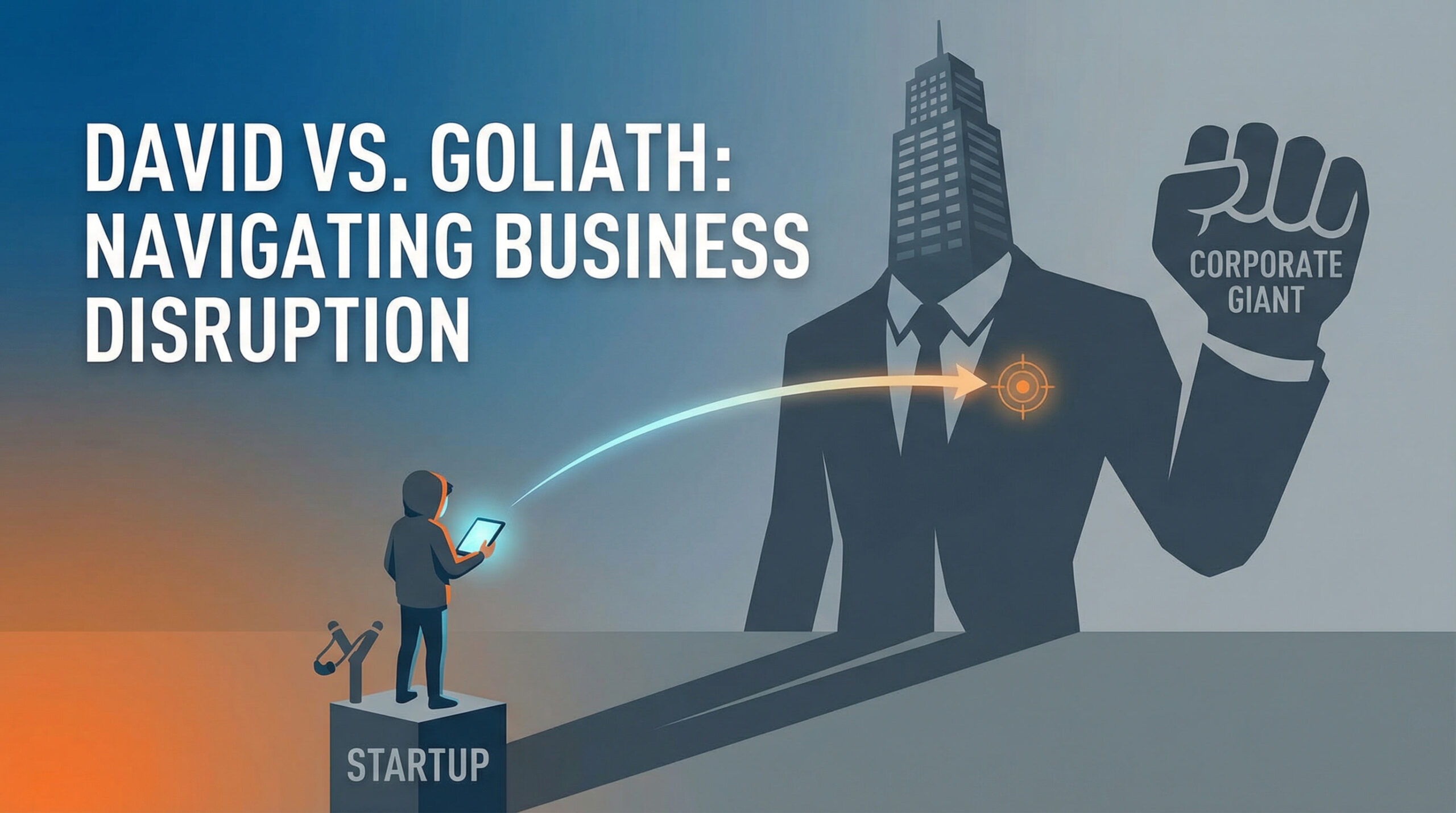
David doesn't need to outspend Goliath.
David needs to out-MANEUVER Goliath.
This isn't new. It's happened before:
Tesla vs. Auto Industry
SpaceX vs. Aerospace
Solar Panels vs. Utilities
Pattern:
STEFAN is at stage 1-2. History says stage 3-4 is inevitable.
It's not: "Can $300K disrupt $100B?"
It's: "Can $100B incumbents adapt fast enough?"
History says: No.
David doesn't win by fighting Goliath head-on. David wins by changing the rules of the game.
Goliath optimizes for: mass production, standardization, existing customers. David optimizes for: agility, innovation, new markets.
When the game changes, size becomes a liability, not an advantage.
If you're a VC, here's the bet:
Option A: Invest in established water infrastructure company
Option B: Invest $300K in STEFAN
But here's the thing: Option A is actually riskier long-term. Because incumbents are VULNERABLE to disruption.
Option B? If it works, you're in on the ground floor of a licensing model that could generate $50M-$200M annually within 5 years.
Risk-adjusted: Option B is the smarter play.
In 2008, someone had the chance to invest $300K in Tesla. In 2002, someone had the chance to invest $300K in SpaceX. In 2005, someone had the chance to invest in early solar startups.
Most people passed. Because it seemed "too risky."
In 2025, someone has the chance to invest $300K in STEFAN.
History doesn't repeat. But it rhymes.
What will you choose?
STEFAN PUMP – TURBINE
When smart power reshapes the course of history.
